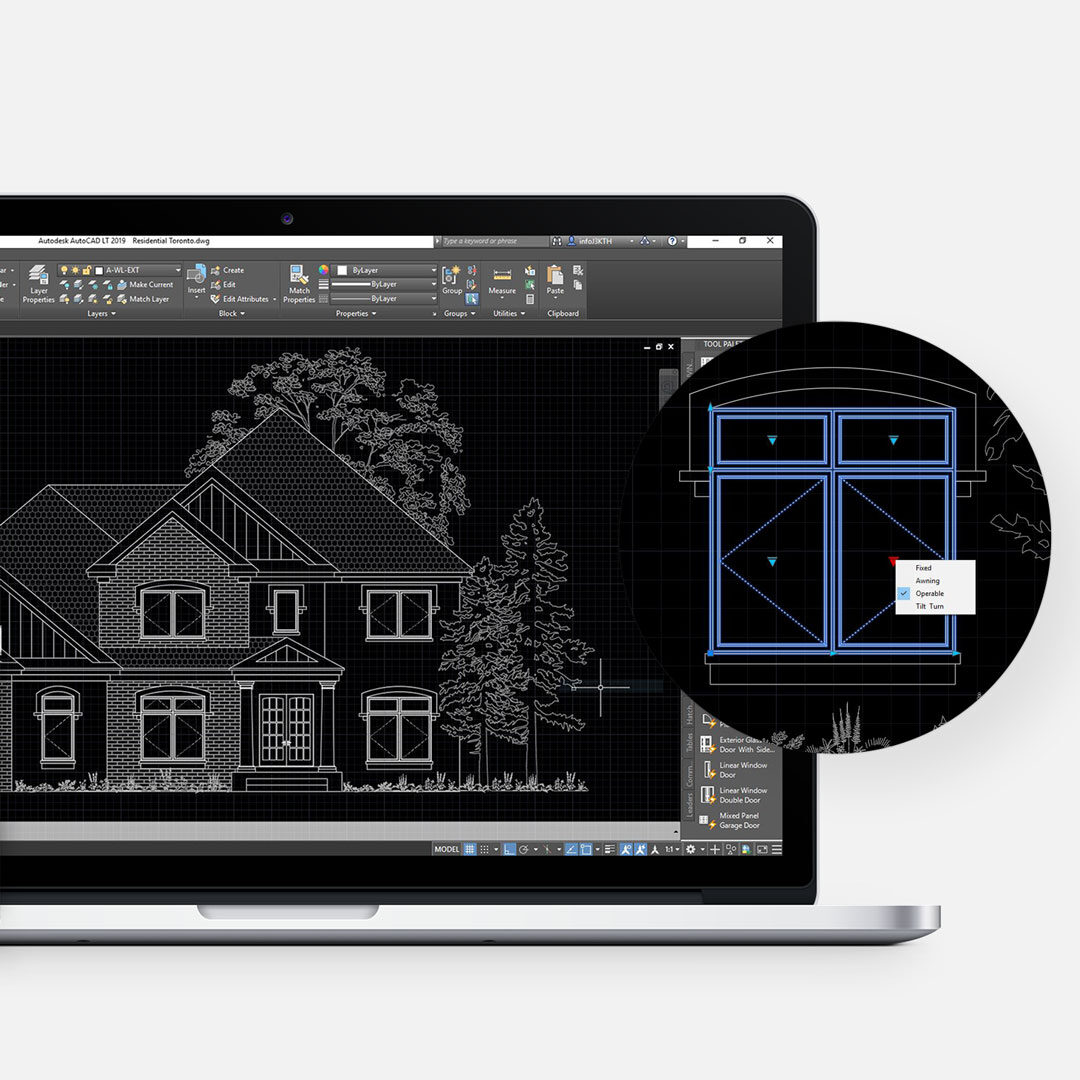
The Milton Bungalow kitchen design is a great example of how thoughtful planning can completely change the way a home looks, feels, and functions.
When we ask clients which room matters most, the answer is almost always the kitchen. It’s where families gather, conversations happen, and everyday life unfolds. That was exactly the case in the Milton Bungalow. From the very beginning, the goal was to create a spacious kitchen that would bring people together while supporting both everyday family life and entertaining.
Here’s a closer look at the design decisions that made that transformation possible.
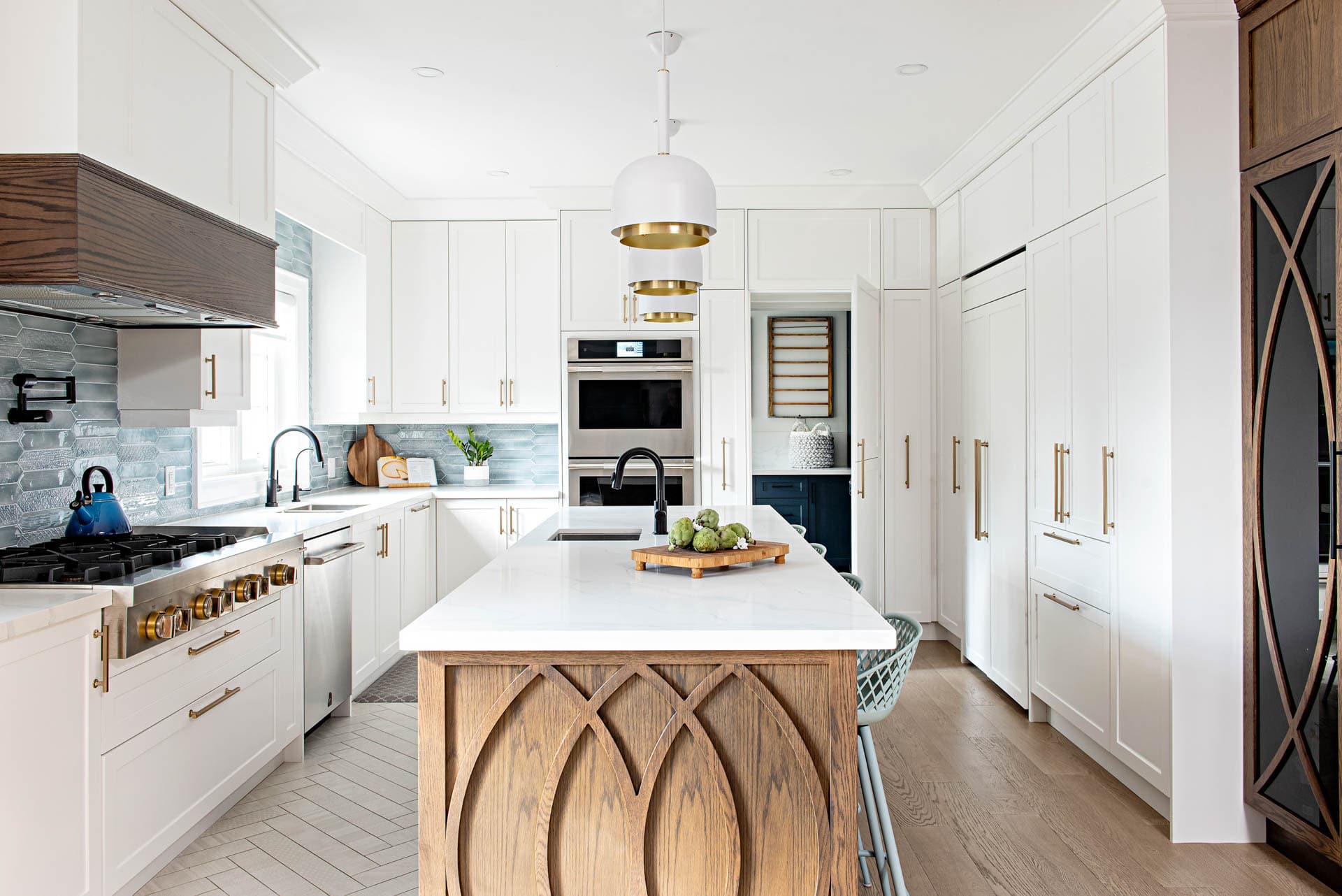
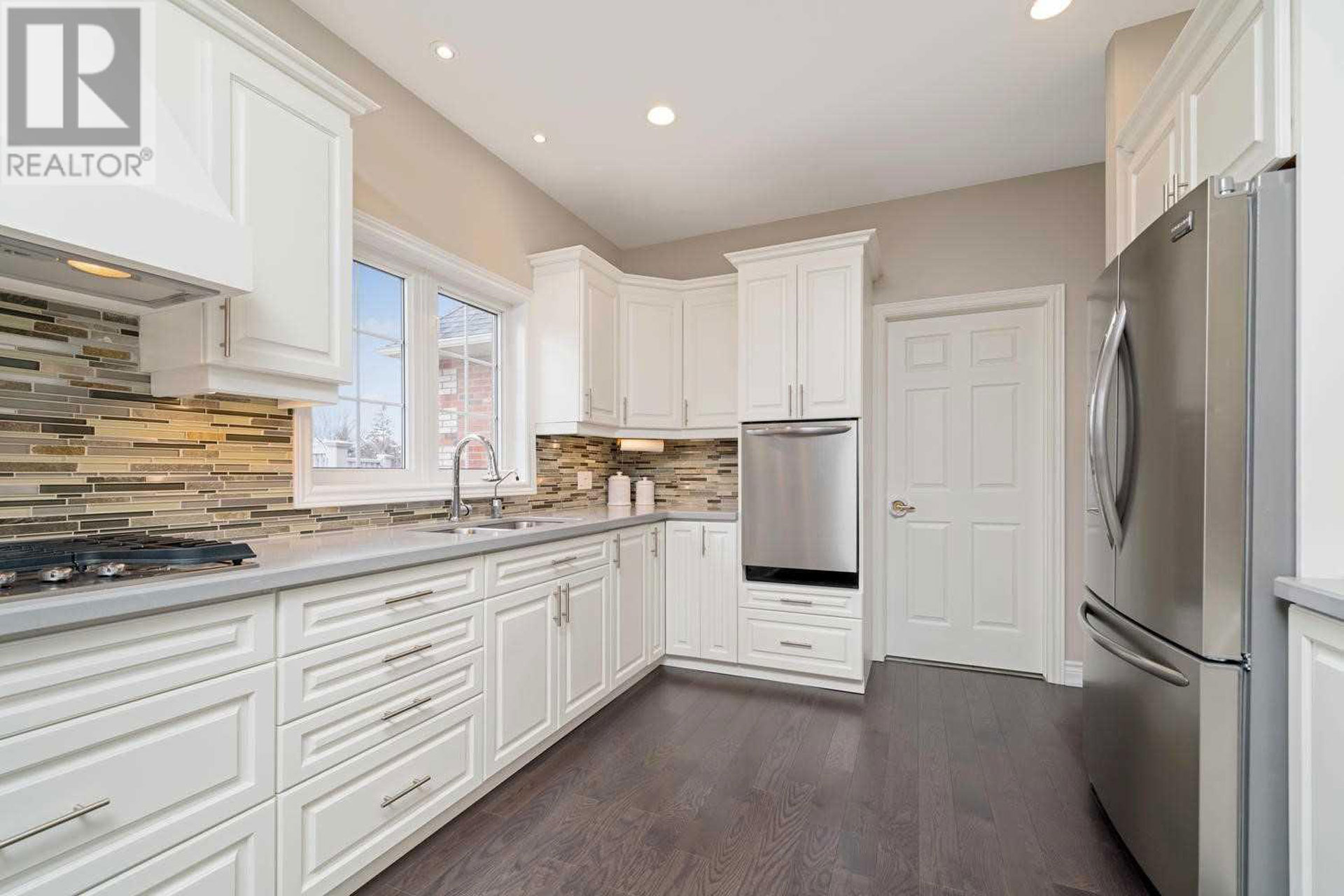
When we first discussed the project, it became clear how important the kitchen was to our clients. They wanted a space that worked just as well for daily cooking as it did for hosting. The existing kitchen, although relatively new, was long and narrow. It didn’t allow for that sense of openness or connection you want when entertaining.
A large island quickly became essential. Not only does it add valuable counter space, but it naturally creates a central point where people gather. If you’re planning your own kitchen renovation, one of the first things to consider is how the layout encourages people to gather rather than simply how many cabinets you can fit into the space. Looking back, it was probably the single decision that changed the way the family uses the space every day.
Kitchen Layout Transformation and Structural Changes
We explored several layout options, but ultimately realized that creating the right kitchen meant moving a structural wall. It wasn’t something we initially wanted to do, but it became necessary to achieve the layout our clients needed.
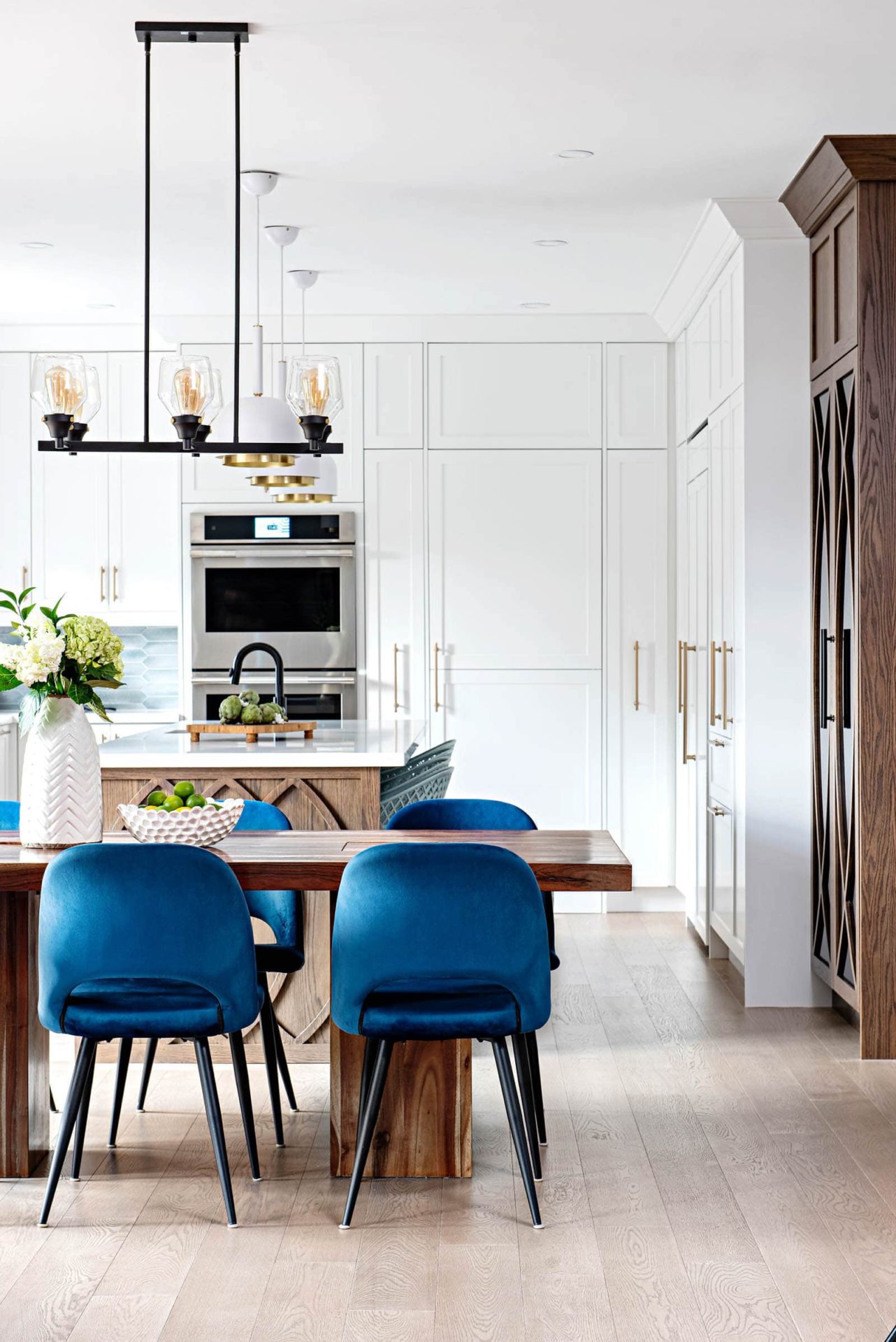
Relocating the wall didn’t just expand the kitchen. It completely transformed the main floor. It allowed us to design cabinetry on three sides, which significantly increased both storage and counter space. Those extra few feet made it possible to introduce a large island with a bar sink and generous seating.
A quick note from experience
It’s important to keep in mind that during a large renovation, you’ll likely face decisions and compromises. Knowing what matters most to you and clearly communicating that to your designer makes a big difference. Their role is to adapt and find solutions, even when they’re not immediately obvious. That’s one of the most valuable lessons I’ve learned over the years. Great design starts with understanding priorities and building around them.
Design Details and Hidden Features
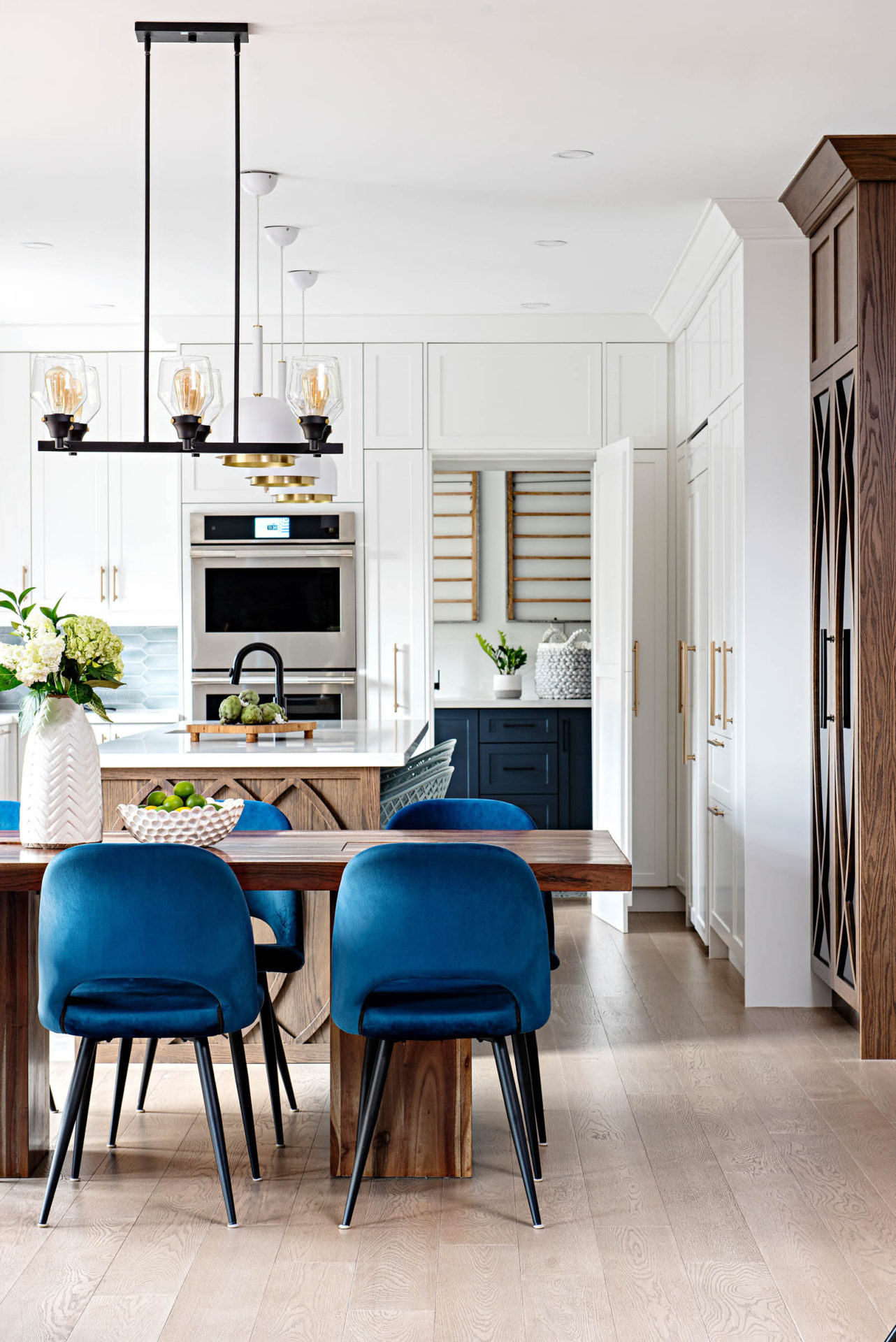
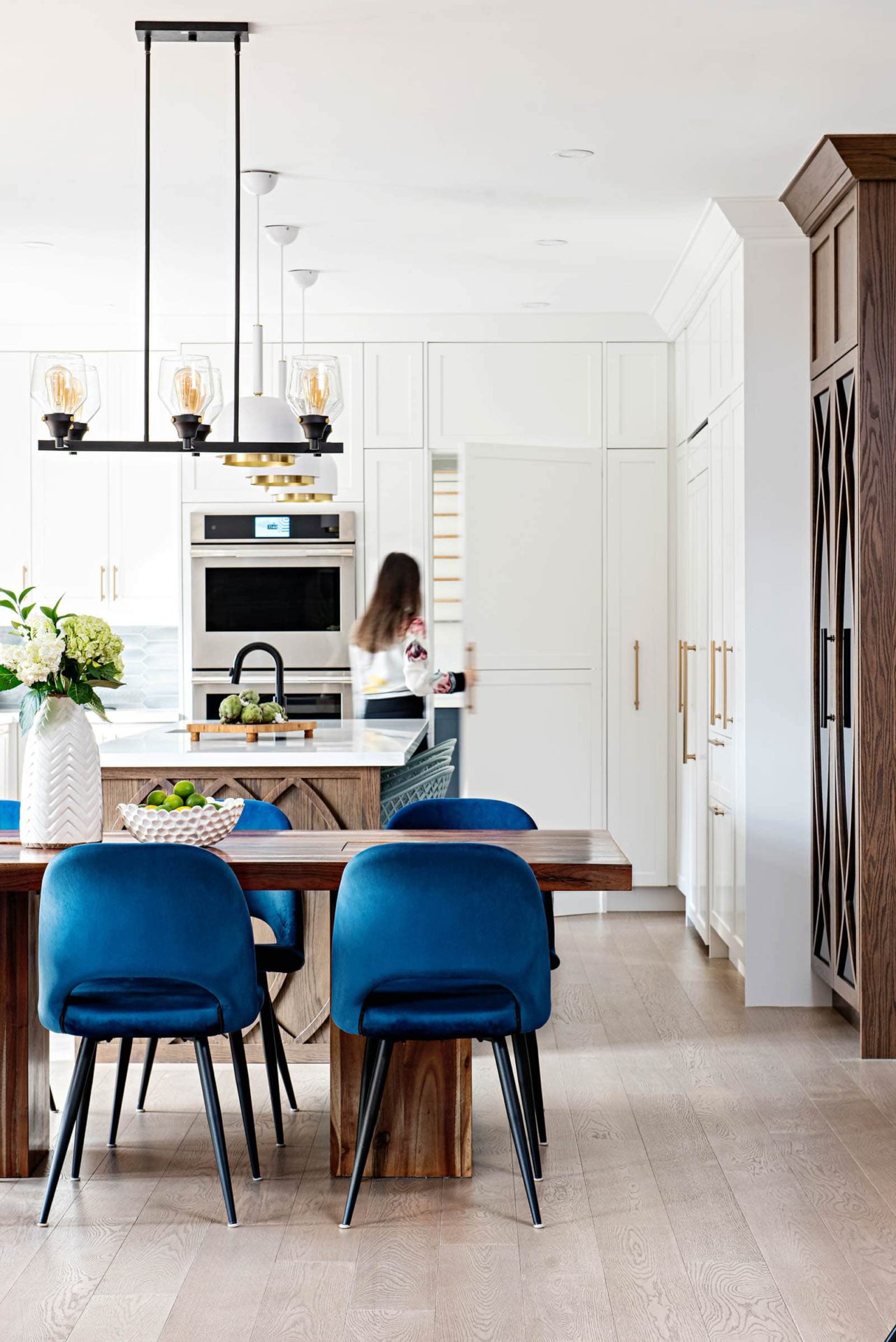
One of the most unique elements in this kitchen is the hidden laundry door. The original layout included a visible door from the kitchen to the laundry. We didn’t love how it interrupted the cabinetry, so we redesigned it as a concealed door integrated into the cabinets.
It keeps the look seamless while adding a subtle moment of surprise. When opened, it reveals a glimpse of the colourful laundry room, something we’ll be sharing more of in another article.
Materials That Shaped the Milton Bungalow Kitchen Design
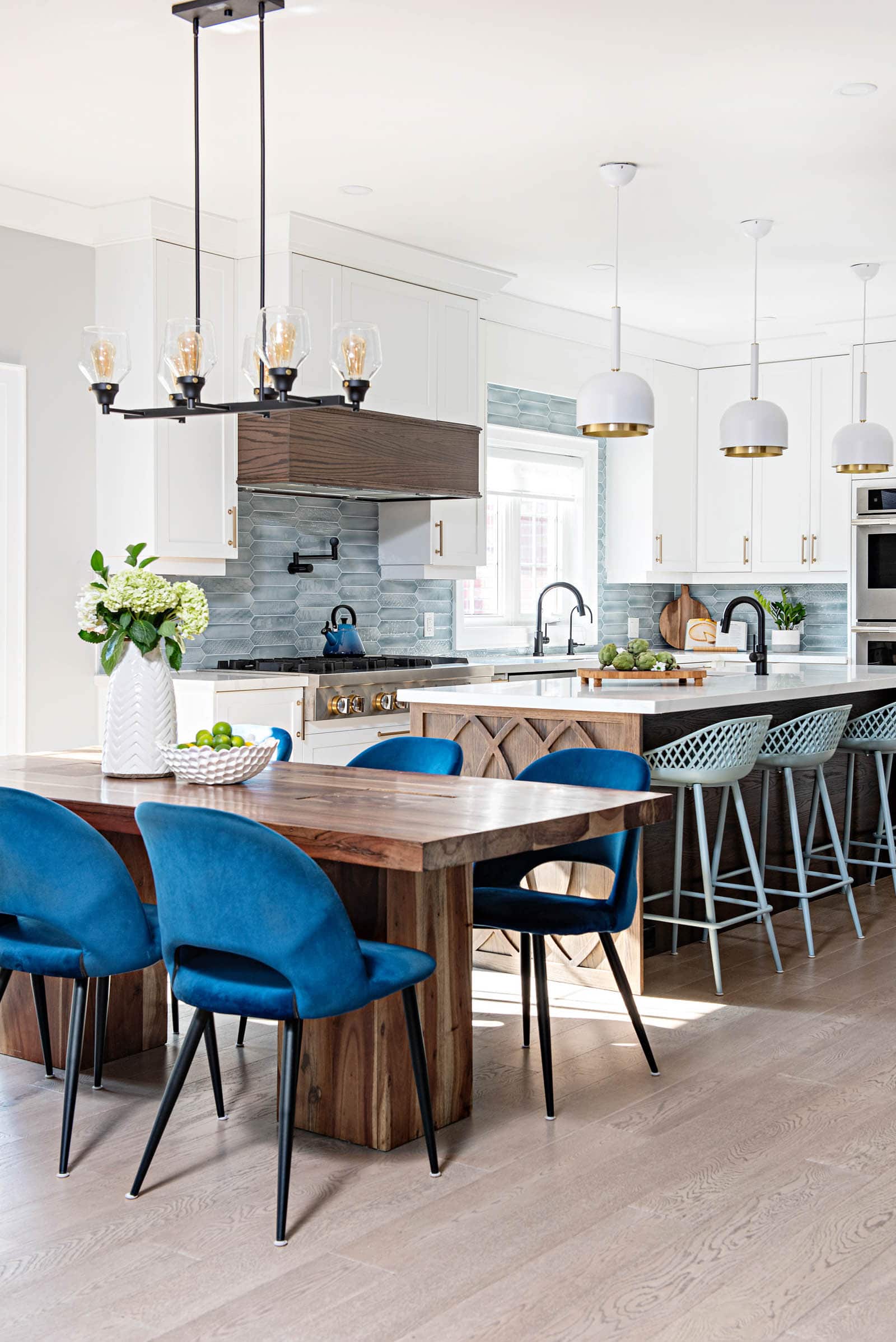
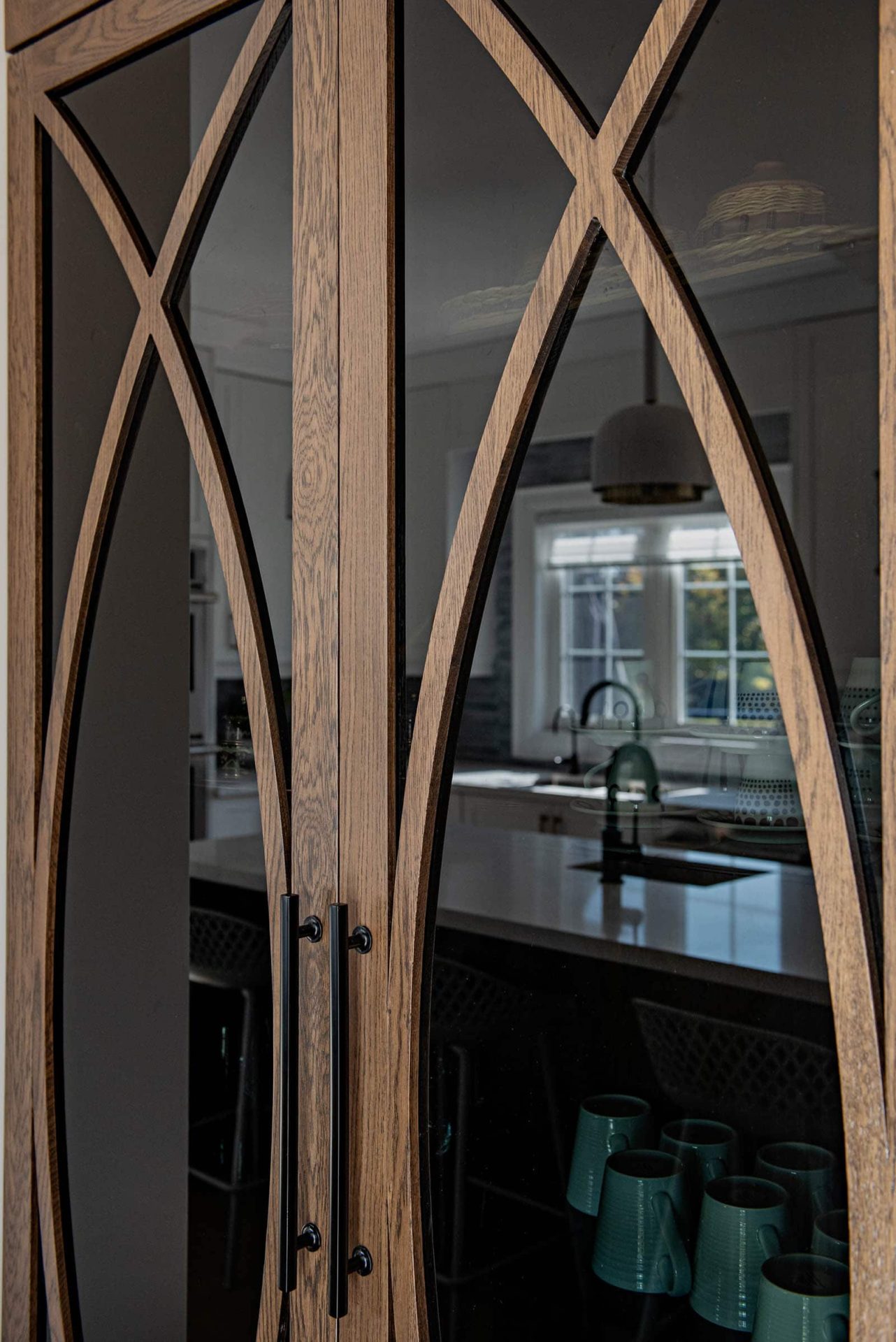
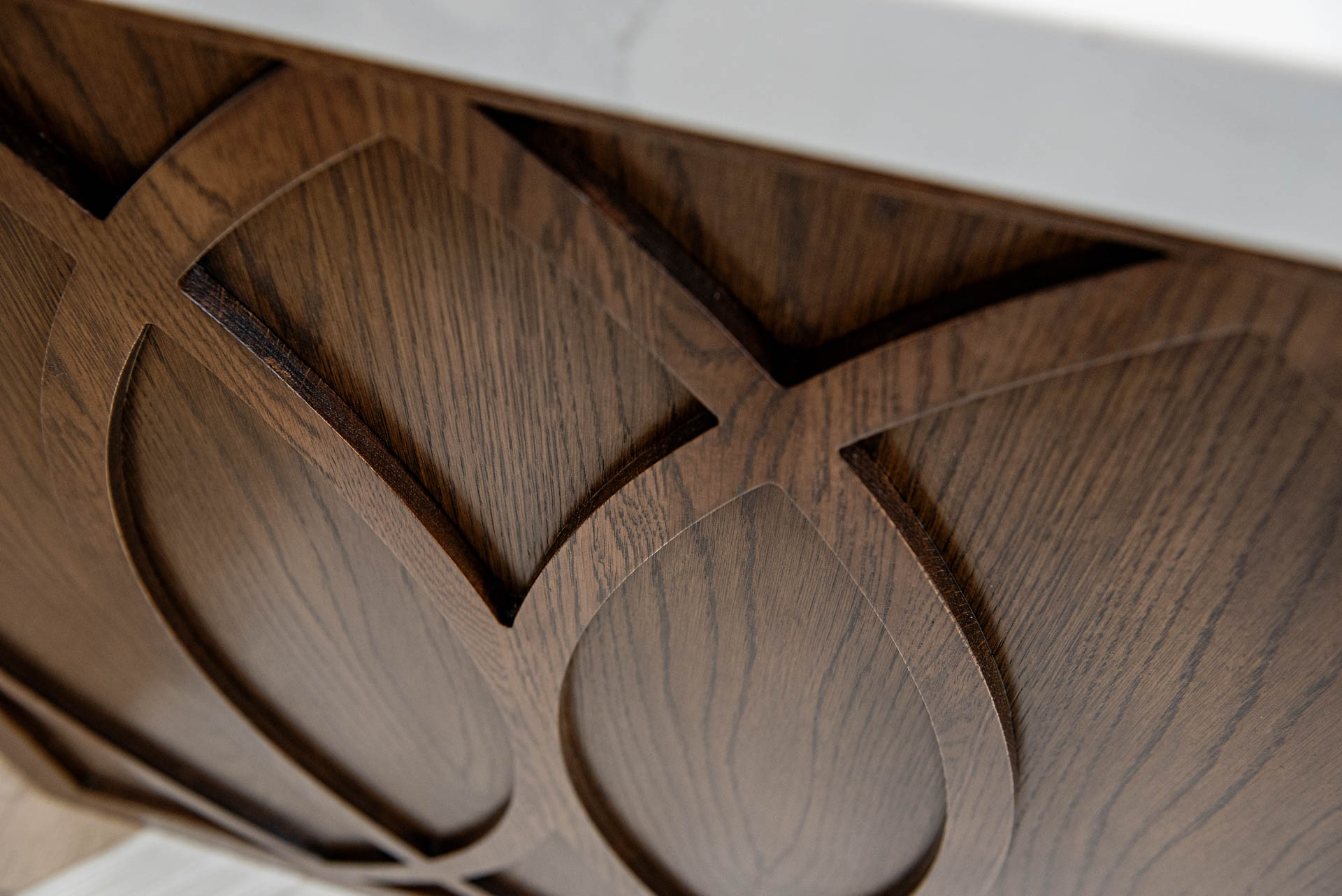
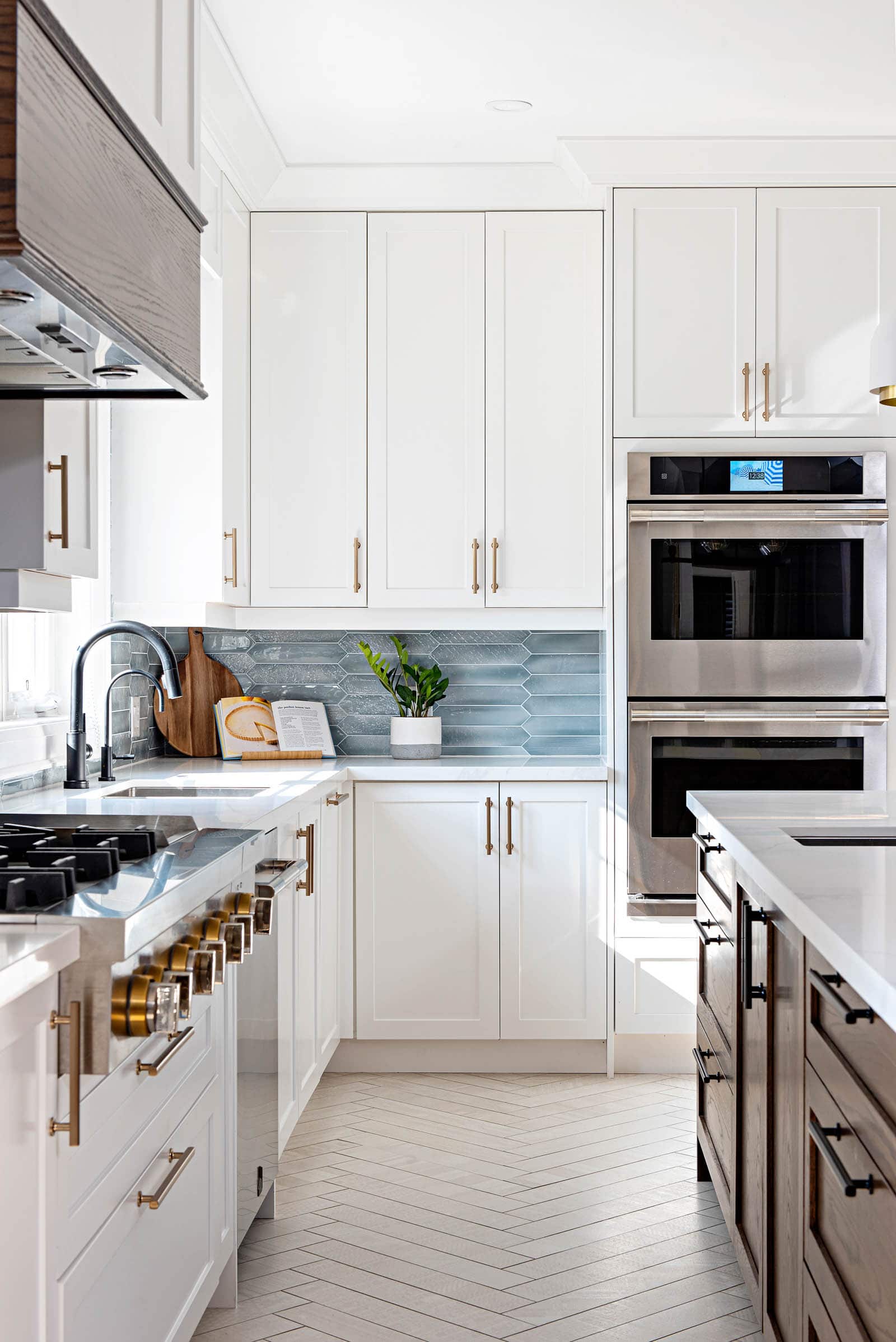
There’s no doubt that a white kitchen is timeless. But we wanted to go beyond that and introduce details that elevate the space. We worked with a combination of warm wood tones and cooler blue and aqua accents. This contrast helped create visual interest without overwhelming the space. A narrow wood display cabinet was added to transition between the kitchen and living area, while also tying materials together.
We also introduced layers of texture through the flooring, backsplash, and cabinet moulding. These small details add depth and keep the space from feeling flat. This kind of layering reflects current interior design trends, where contrast and texture are used to create more dynamic, livable spaces.
Mixing Metals Without Overdoing It
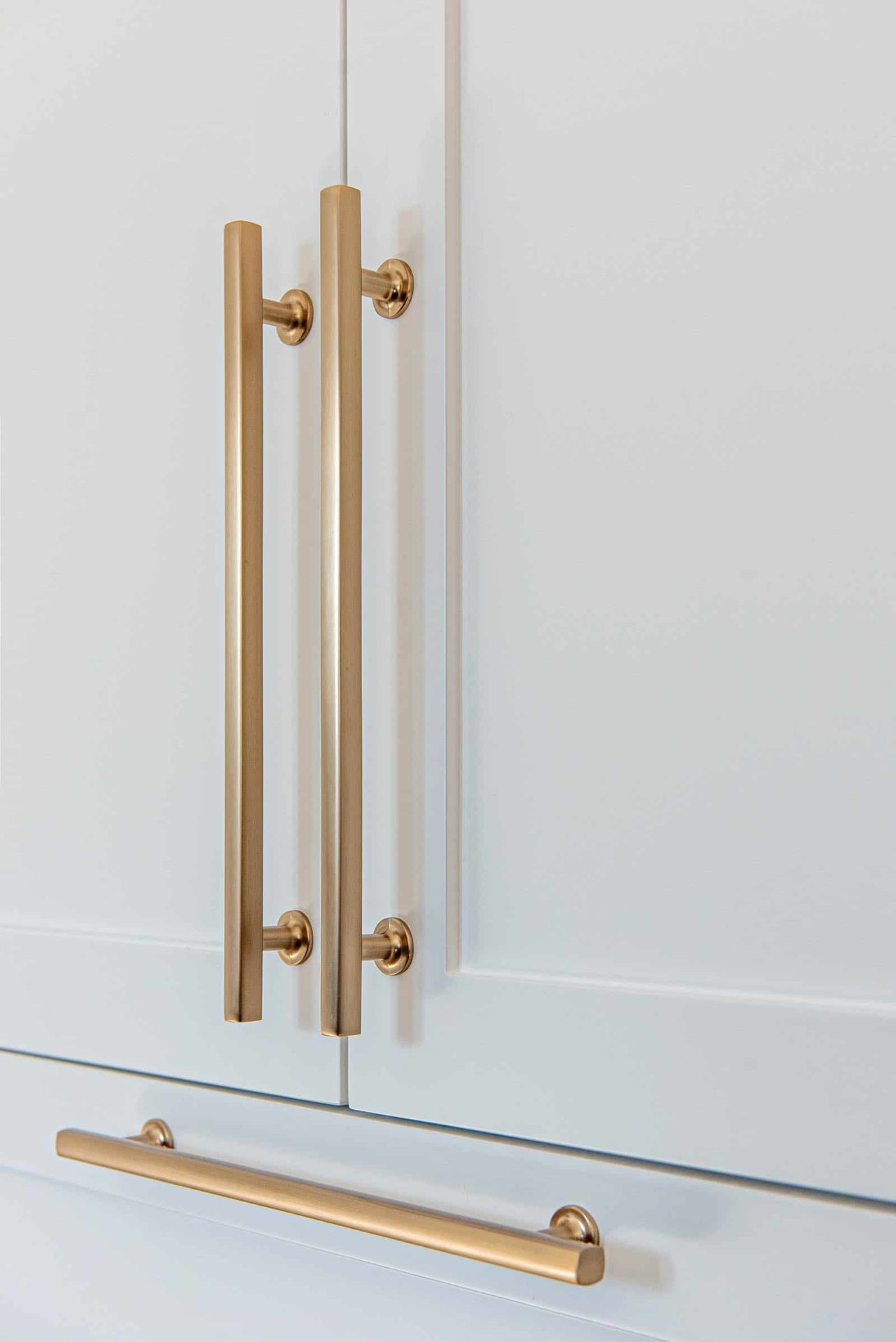
When we first suggested gold accents, our clients were hesitant. Understandably so, gold hasn’t always had the best reputation. But finishes have evolved significantly.
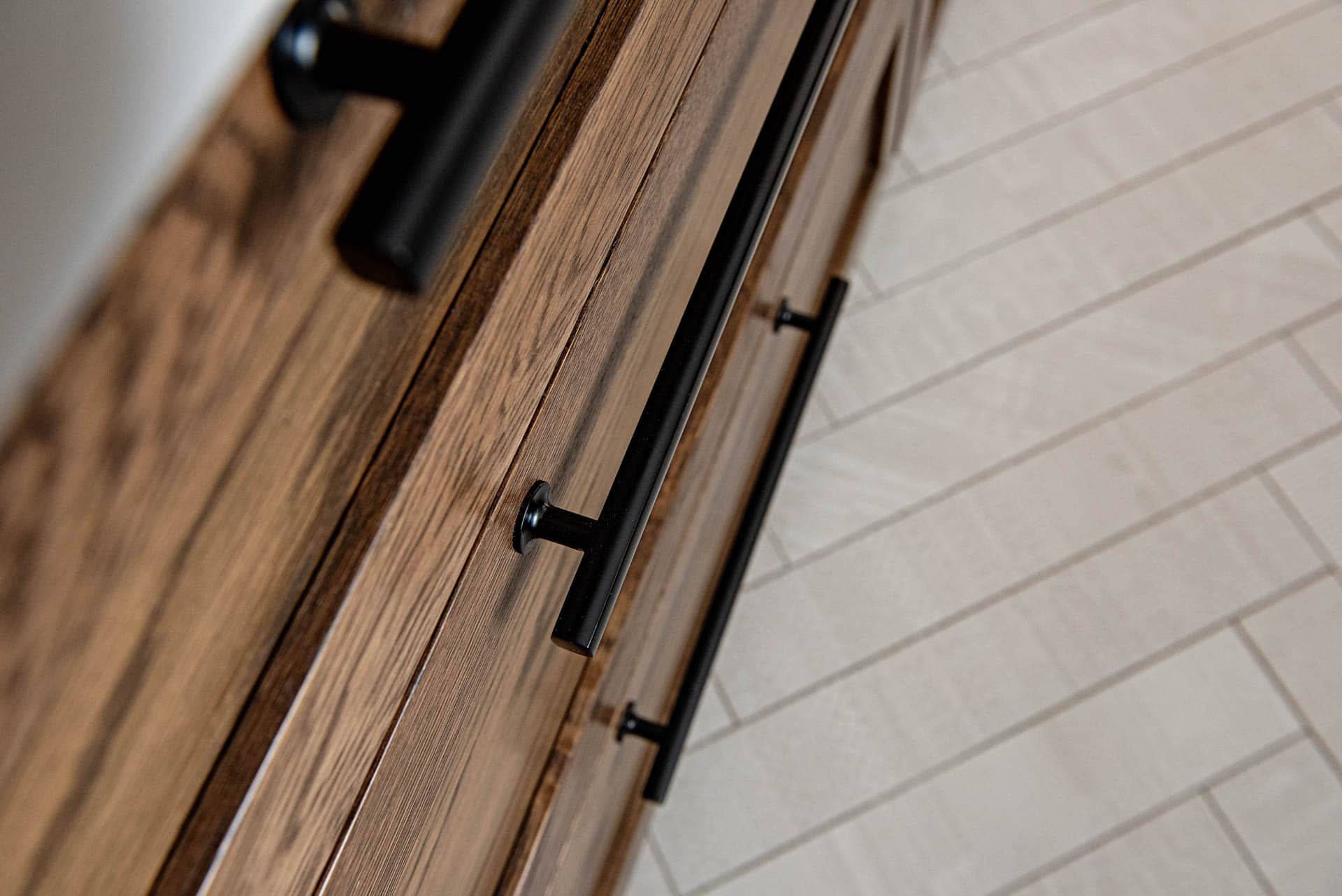
We focused on a champagne gold that feels subtle and refined. To balance it, we introduced black plumbing fixtures and black hardware on the island and display cabinet. Mixing metals can be a great way to add depth and avoid a monotonous look. The key is repetition. In this kitchen, both finishes appear across hardware, plumbing, lighting, and even furniture. That consistency is what makes the mix feel intentional.
Details That Bring the Milton Bungalow Kitchen Design Together
We strongly believe that details can make or break a design. One of the most challenging elements in this kitchen was actually the crown moulding. It’s often left as a final decision, but here it became a key coordination point. We wanted the moulding to wrap continuously around the space so the kitchen felt fully integrated.
Because materials came from different suppliers, coordinating everything required extra effort between manufacturers and contractors. But in the end, that detail helped pull the entire space together.

Flooring Decisions and Transitions
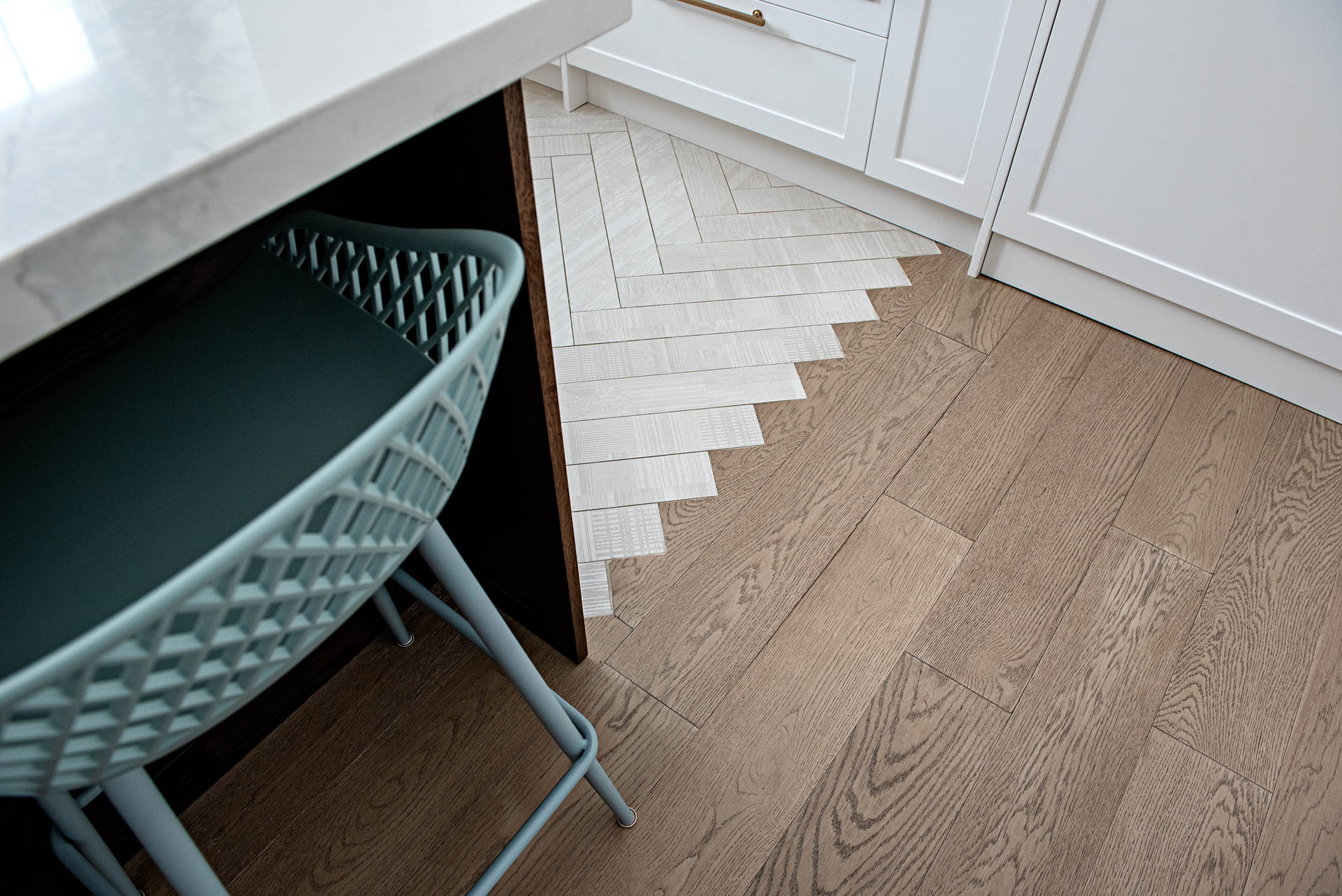
One of the most common questions we get is whether to continue wood flooring throughout the kitchen or introduce tile. There isn’t a universal answer. It really depends on how the space is used. In the Milton Bungalow, we used this as an opportunity to introduce both texture and function.
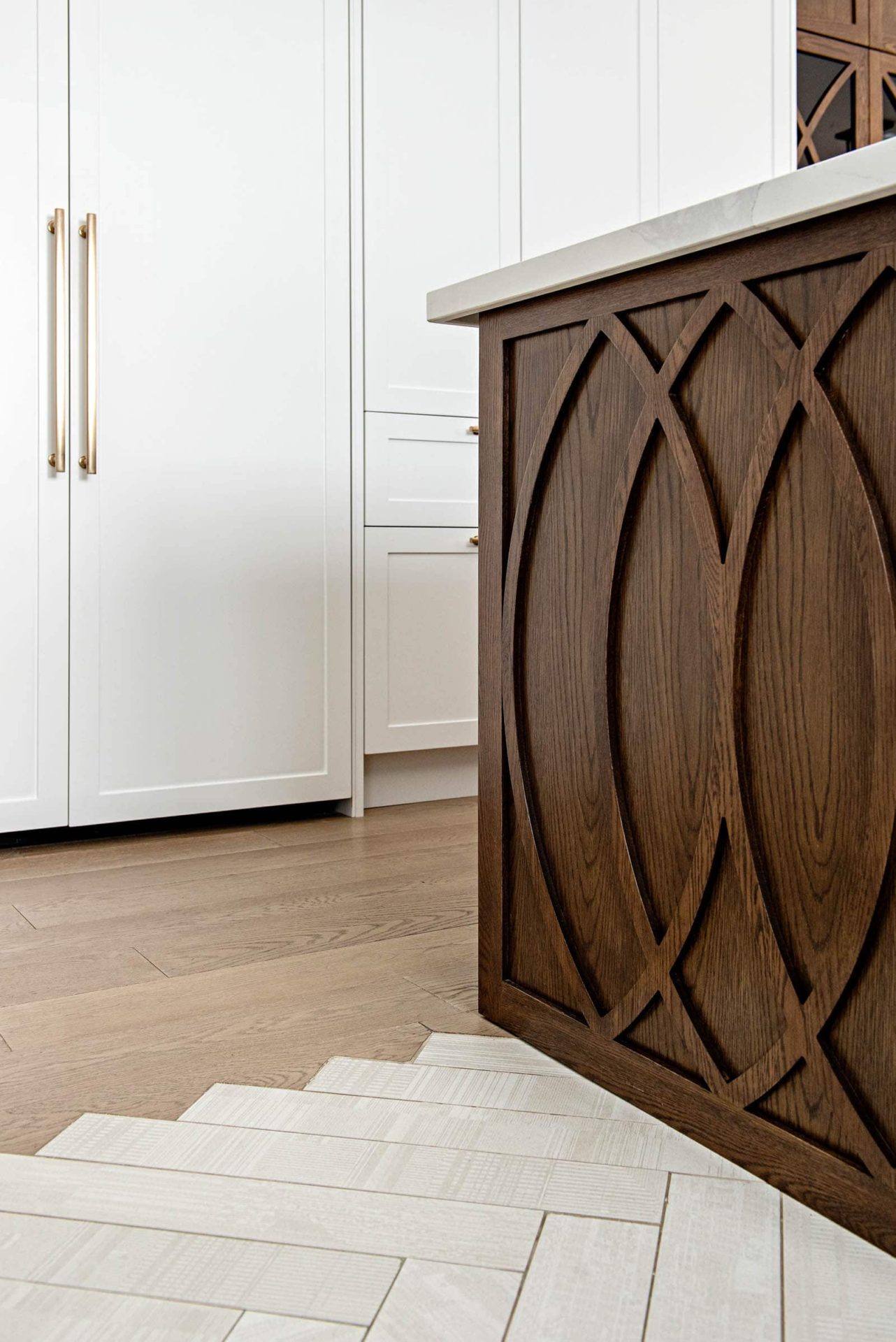
The herringbone tile was designed to flow into the wood flooring, rather than creating a sharp transition. Visually, it adds interest. Functionally, it separates the cooking area from the entertaining space.
Continue Exploring the Milton Bungalow Transformation
The Milton Bungalow kitchen design is one part of this complete home renovation. Explore the Milton Bungalow portfolio project to see the finished transformation, or continue with the Milton Bungalow Transformation to follow the story behind the renovation from concept to completion.
If you’re planning a kitchen renovation of your own, you can also explore our Kitchen Design articles for more layouts, materials, and real project insights. Learn more about our Residential Interior Design Services and how we help homeowners create kitchens designed around the way they live. For more completed projects and behind-the-scenes inspiration, follow us on Instagram.


Leave a Reply
You must be logged in to post a comment.