At a time where in most places space comes at a premium, there is nothing worse than wasted space. If you spend a bit of time on Pinterest or Instagram, you’ll start noticing the same bathroom design layouts over and over again. They look great, they follow certain trends, and they check all the ‘must-have’ boxes. But what’s often missing is the question: does this actually work for your space? If you’re exploring different bathroom layout ideas, sometimes stepping away from the standard approach can lead to a much better result.
Looking at the Space Differently
So what is the purpose of this article you may ask? It is simply to make everyone pause for a minute and rethink what’s possible. As designers, we’re often brought in to find ways to make a space work better. That usually means going beyond the obvious and exploring layouts that aren’t immediately apparent. So let’s explore this, shall we?
The next major renovation I’m planning in the Vellore Village Residence is the master bathroom. While it may still be months away, starting the design early helps with budgeting, planning, and anticipating challenges before construction begins.
What’s Not Working in the Current Layout
Let’s analyze the current bathroom layout and see why it does not work.
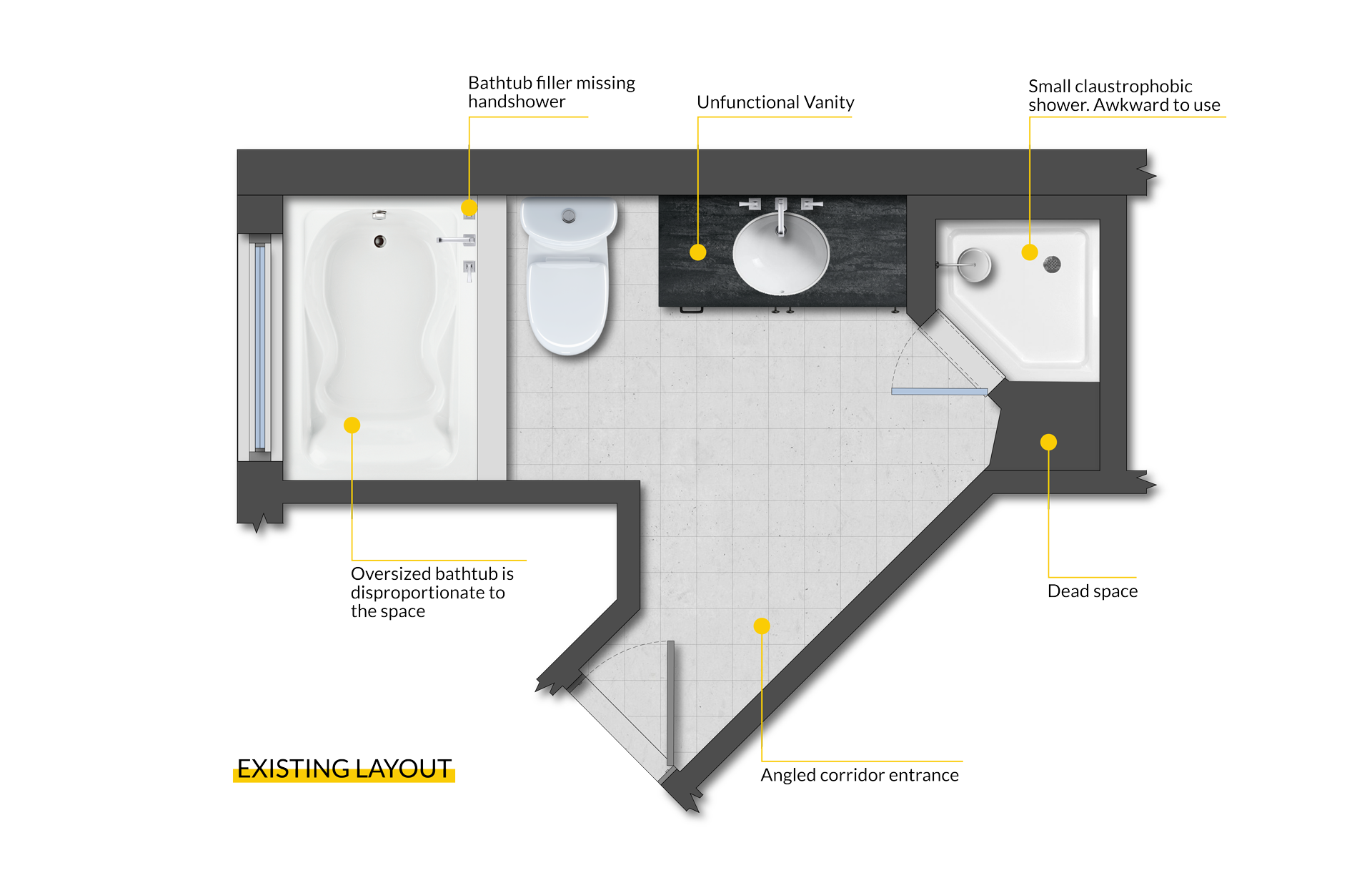
At first glance, the bathroom feels larger than it actually is. There’s an angled corridor that creates the illusion of space, but the usable area is long and narrow. Once you look closer, it becomes clear that the layout isn’t working as well as it could.
On one side, the built-in bathtub is oversized and doesn’t fit the proportions of the room. It also lacks a proper filler, which makes it difficult to clean and use. The vanity itself is a decent size, but not very functional when it comes to storage.
The shower is probably the most surprising element. It’s a small corner unit that feels cramped and uncomfortable. When measuring the space, something didn’t add up. There was a noticeable amount of unused space next to the shower that could have been utilized. The only logical explanation is that the space was designed around a standard shower size, rather than designing the shower to fit the space.
Tip: Make a list of what works for you and what doesn’t in the space.
Start With Your Priorities
Before even looking at new layouts, it’s important to understand what matters to you. Make a simple list of what works and what doesn’t in your current space. This becomes the foundation for any design decision. In this case, the priorities were clear. A freestanding tub, a more functional vanity with better storage, and a larger, more comfortable shower. These are common requests, and they often shape the direction of most bathroom layout ideas.
Exploring Layout Options
After testing different configurations, two layouts stood out as viable solutions. I will start with the more conventional layout, and most obvious solution. Because of the changes involved, this would also be the most cost effective layout.
Conventional Layout
This option is the more traditional approach. By opening up the existing shower wall, we can use the available space to create a larger shower. Removing the curb allows for a more seamless transition between the shower and the rest of the bathroom. This type of design requires careful planning, especially since existing conditions aren’t always clear until demolition begins.
The oversized built-in tub would be replaced with a freestanding one, and the vanity could remain in its current position while being expanded. Even though there’s room for two sinks, this design would likely keep one, focusing more on usable counter space. It’s a simple and effective layout that checks all the boxes. There’s nothing wrong with it, and it’s often the more cost-effective option since most plumbing stays in place.

Alternative Layout
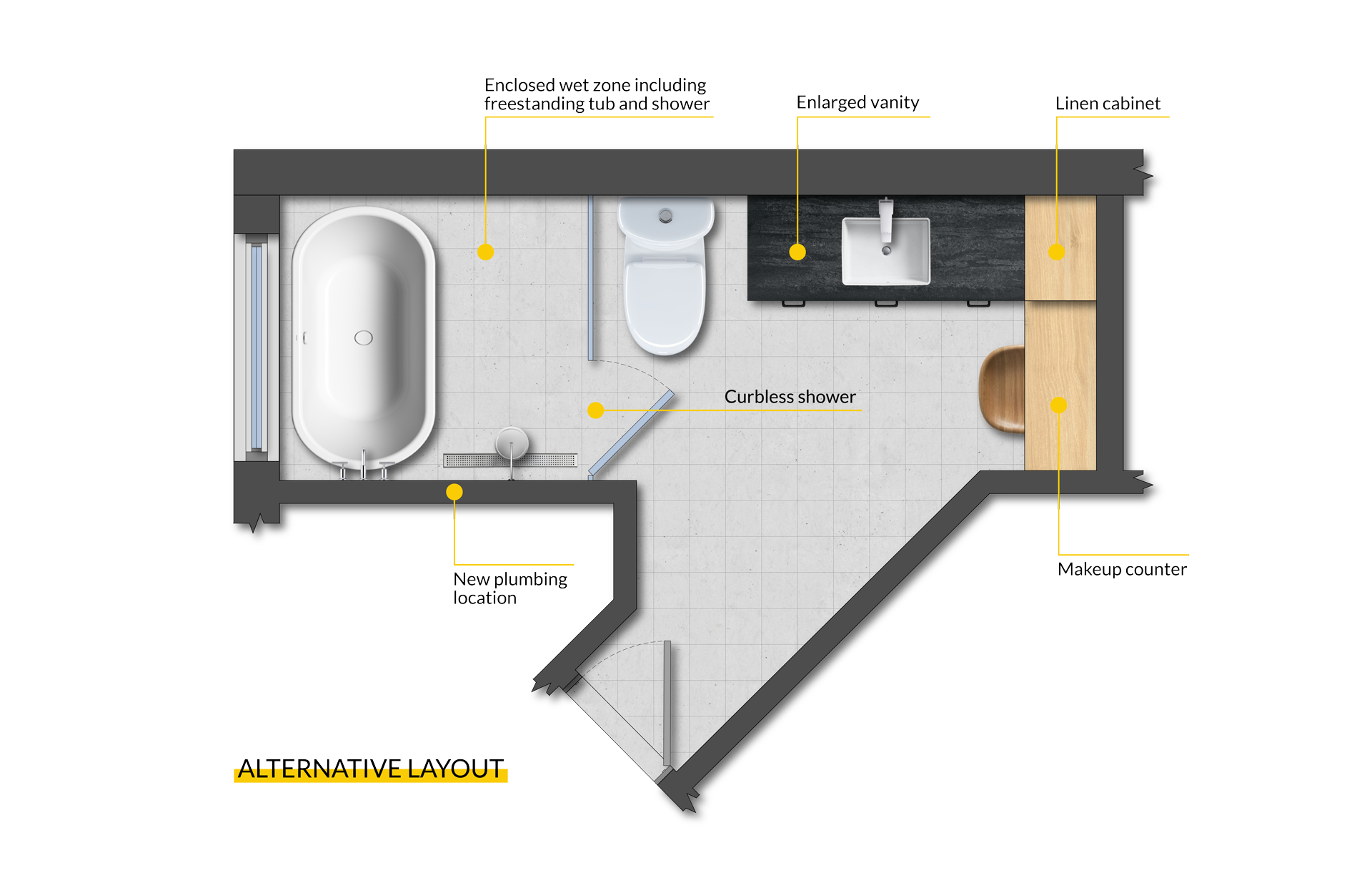
Now let’s look at the less conventional option, and why it’s so appealing. In this layout, the tub is still replaced with a freestanding version, but the shower is moved next to it. This creates what’s known as a wet zone. While not as common in Canada, this approach is widely used in Europe and in many high-end hotels. It allows the shower to feel larger and creates a more open and flexible layout.
Because there’s already plumbing in that area, the transition is more manageable than it might seem. The space also allows for a standard shower door and panel, which helps control costs. The toilet would need to be relocated, but it would still remain out of sight when entering the room.
Both layouts include a larger vanity, but this version introduces something extra. A dedicated makeup area. This is something I’m personally very excited about, as it adds both function and a bit of everyday luxury to the space.
Rethinking What’s Possible
Most people assume there’s only one way to lay out a bathroom. In reality, there are often multiple solutions. The role of a designer is to explore those alternatives and find the one that works best for how the space is actually used. If you’re exploring different bathroom layout ideas, don’t be afraid to question the ‘standard’ approach. Sometimes the better solution is the one that feels less obvious at first.

Final Thoughts
Layout is often the most overlooked part of a bathroom, yet it has the biggest impact on how the space actually works. It’s easy to follow what you see everywhere else, but that doesn’t always mean it’s the right solution for your home. Sometimes a small shift in layout can unlock space you didn’t even realize you had.
If you’re exploring different bathroom layout ideas, take the time to question what’s already there. The best design isn’t always the most obvious one, it’s the one that fits how you live.


Leave a Reply
You must be logged in to post a comment.