This Unionville Residence kitchen design is a great example of how thoughtful planning can completely transform the way a home functions. As part of the full Unionville Residence renovation, the kitchen had plenty of potential, but it no longer supported the way the homeowners lived. It felt outdated, lacked storage, and didn’t make everyday cooking or entertaining as enjoyable as it could be.
Here’s how the design came together. From the layout and circulation to the material selections and custom millwork, every decision was made to create a kitchen that feels both practical and timeless.
The original kitchen followed a typical L-shaped layout with a breakfast area at the back of the main floor. The layout itself wasn’t necessarily the problem. It simply wasn’t making the best use of the available space.
The original baby blue kitchen felt dated, offered limited storage, and struggled to support the family’s daily routines. Since our clients love to cook, the goal was to create a Unionville Residence kitchen design that works beautifully every day, not just one that looks beautiful in photographs.
Take a look at the drastic transformation below.
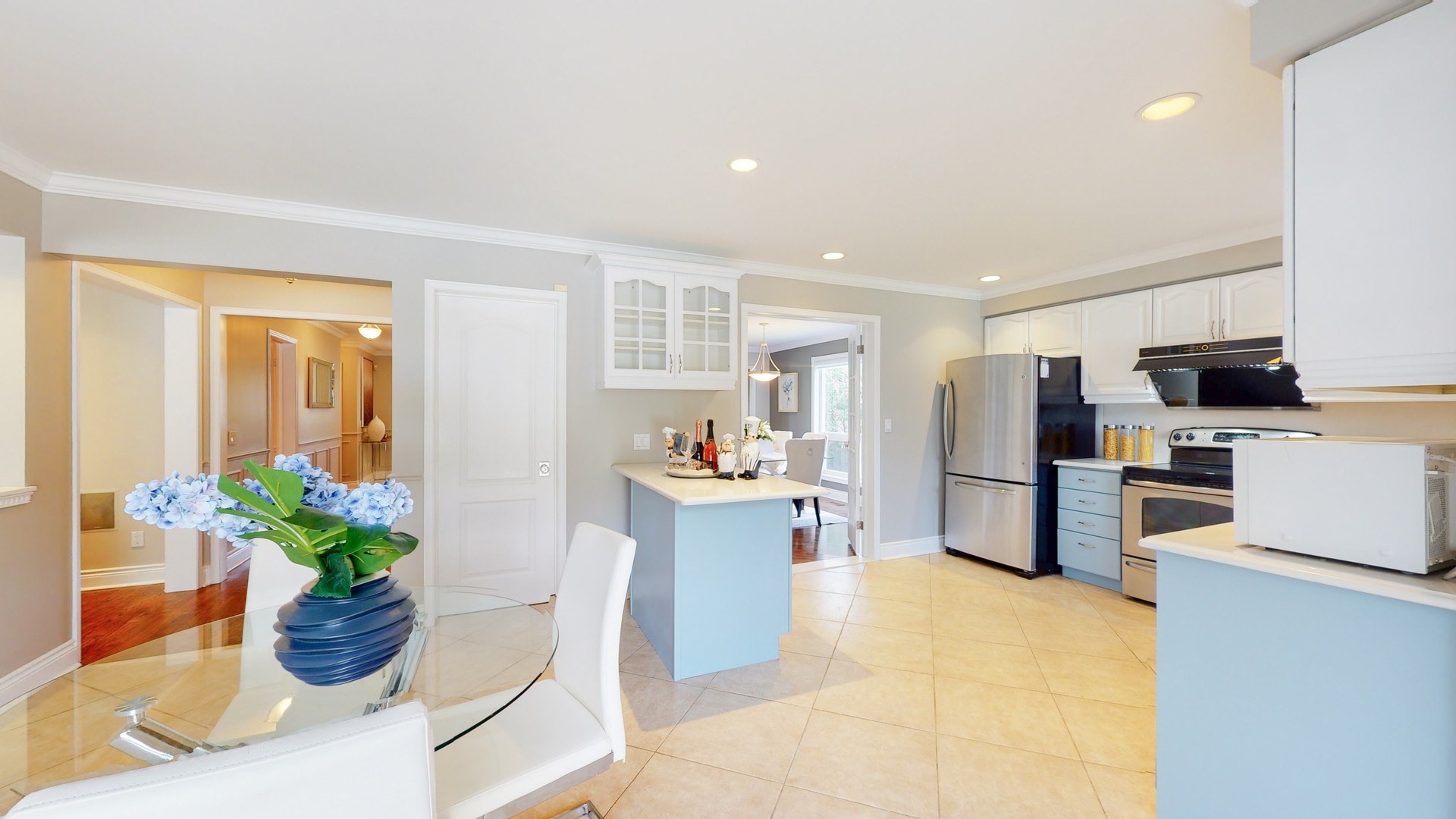
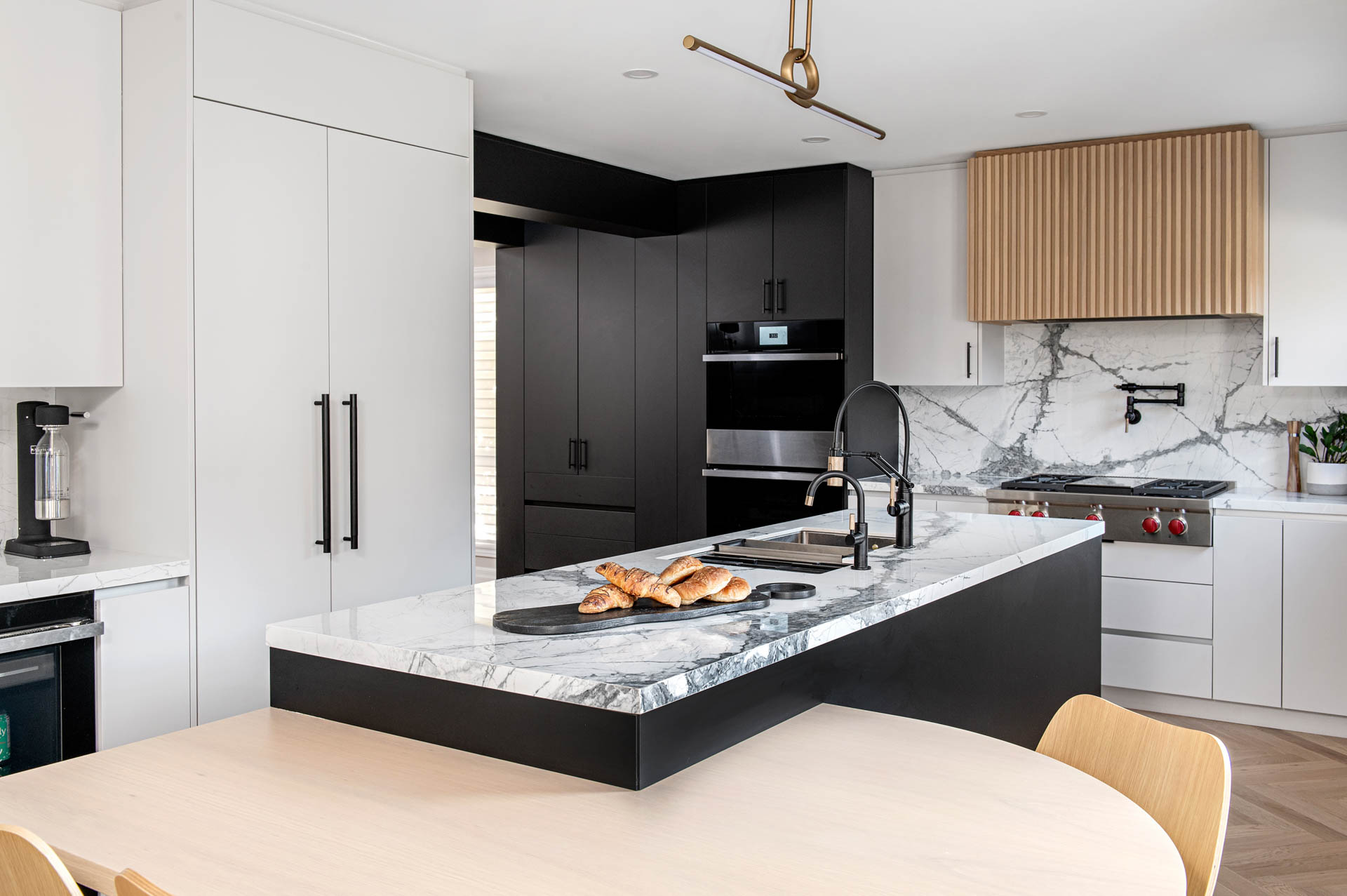
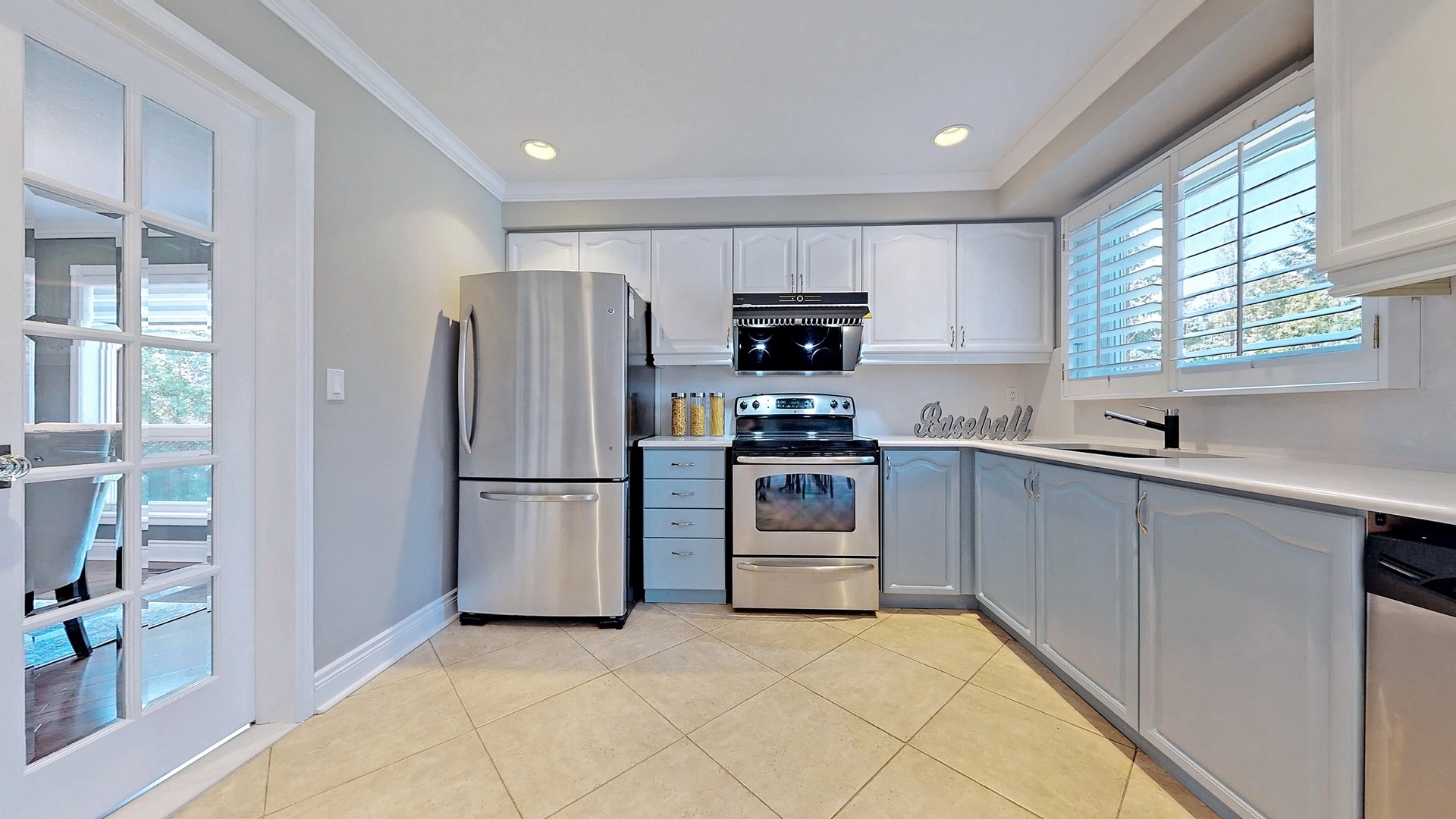
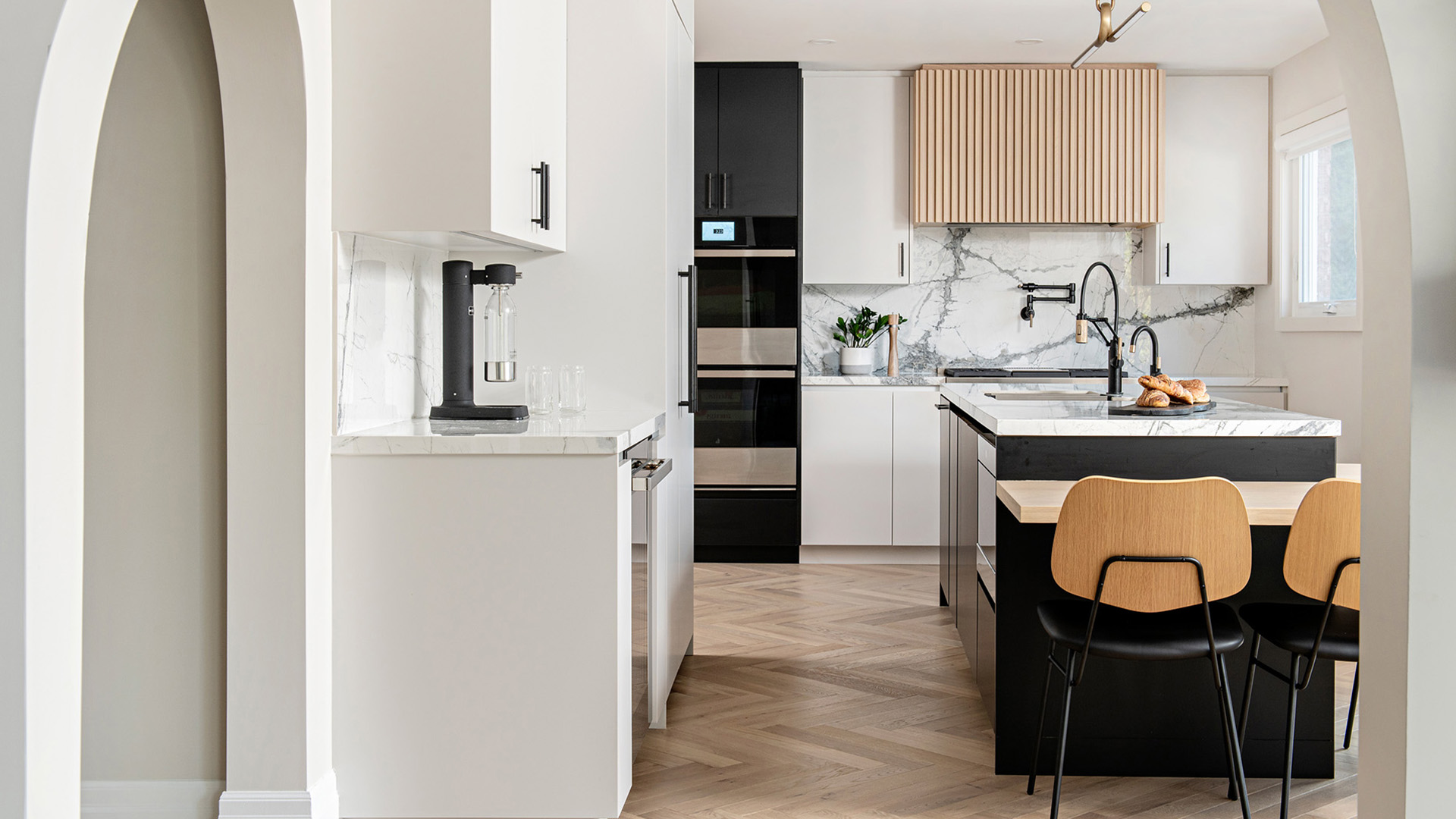
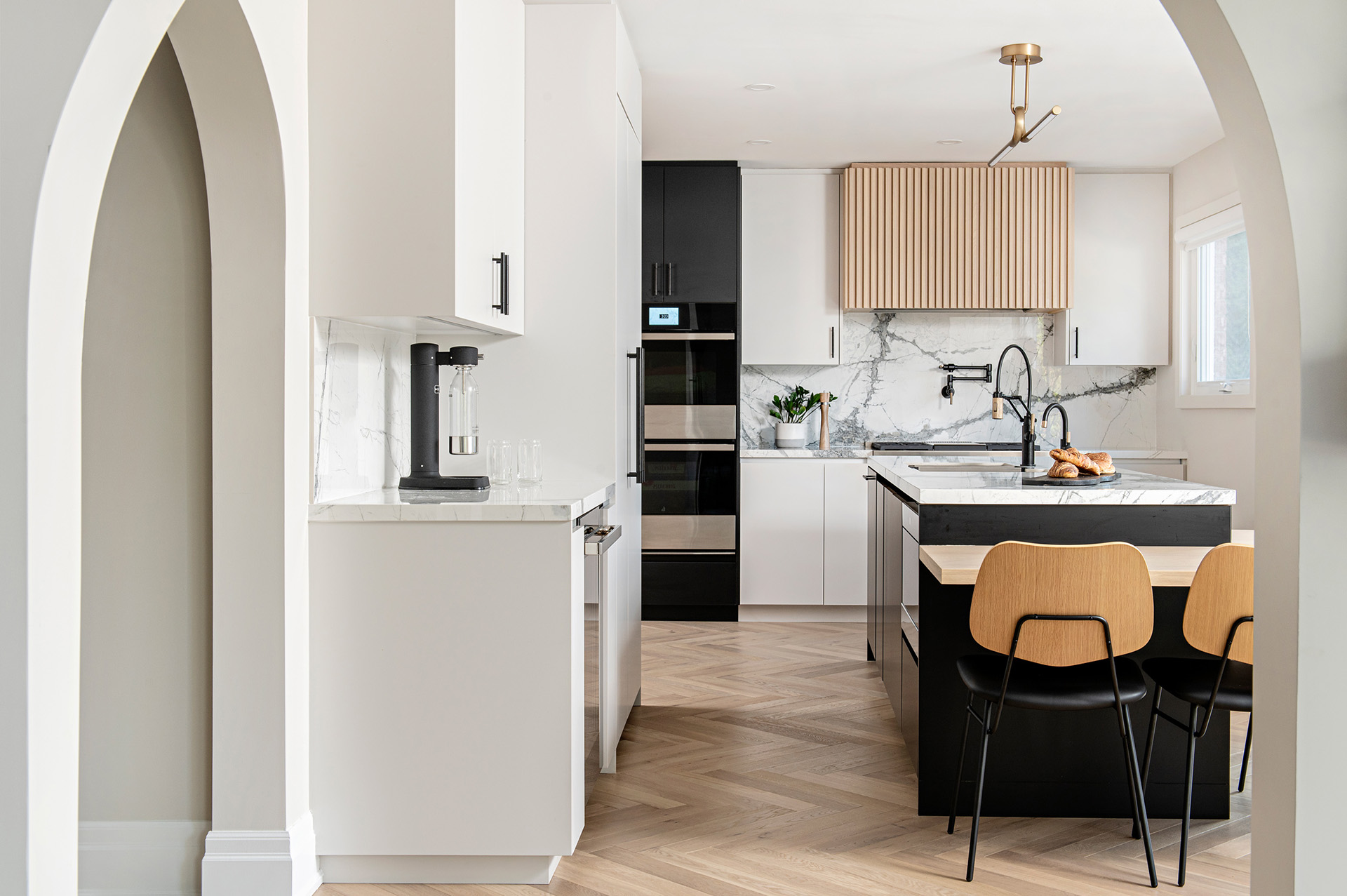
Three main ideas guided this renovation. First, we focused on maximizing space and function. Then, we worked on creating a natural flow between cooking, prepping, and storage. And finally, we designed a dedicated breakfast area with enough counter space for a coffee station and everyday use.
Unionville Residence Kitchen Design: Layout, Functions, and Challenges
The kitchen itself was a good size, but its narrow layout came with a few challenges. One of the key moves was introducing a cantilevered table off the island. This allowed us to create a larger island, use the full wall behind it, and still include seating without crowding the space. It also gave us the opportunity to bring the light wood from the hood fan into the tabletop, which helped warm up the space and tie everything together. If you’re exploring similar kitchen design ideas, thinking about how each element connects within the space is essential.
We spent quite a bit of time deciding where the coffee station should go. In the end, placing it near the morning entrance, fridge, and breakfast table made the most sense. That decision created a very natural flow within the kitchen. These kinds of choices are a big part of good interior design tips, where layout directly impacts how you use the space every day.
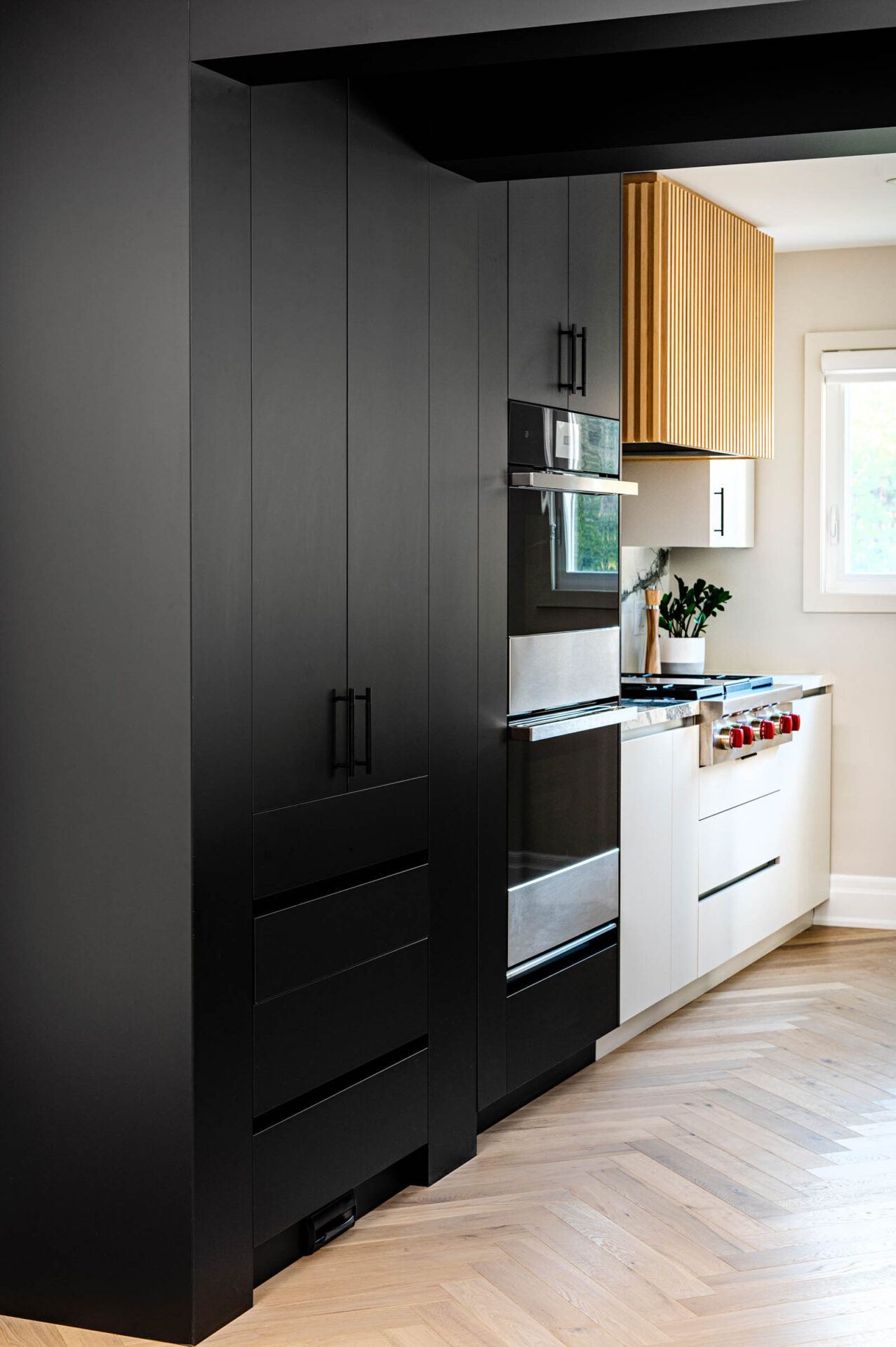
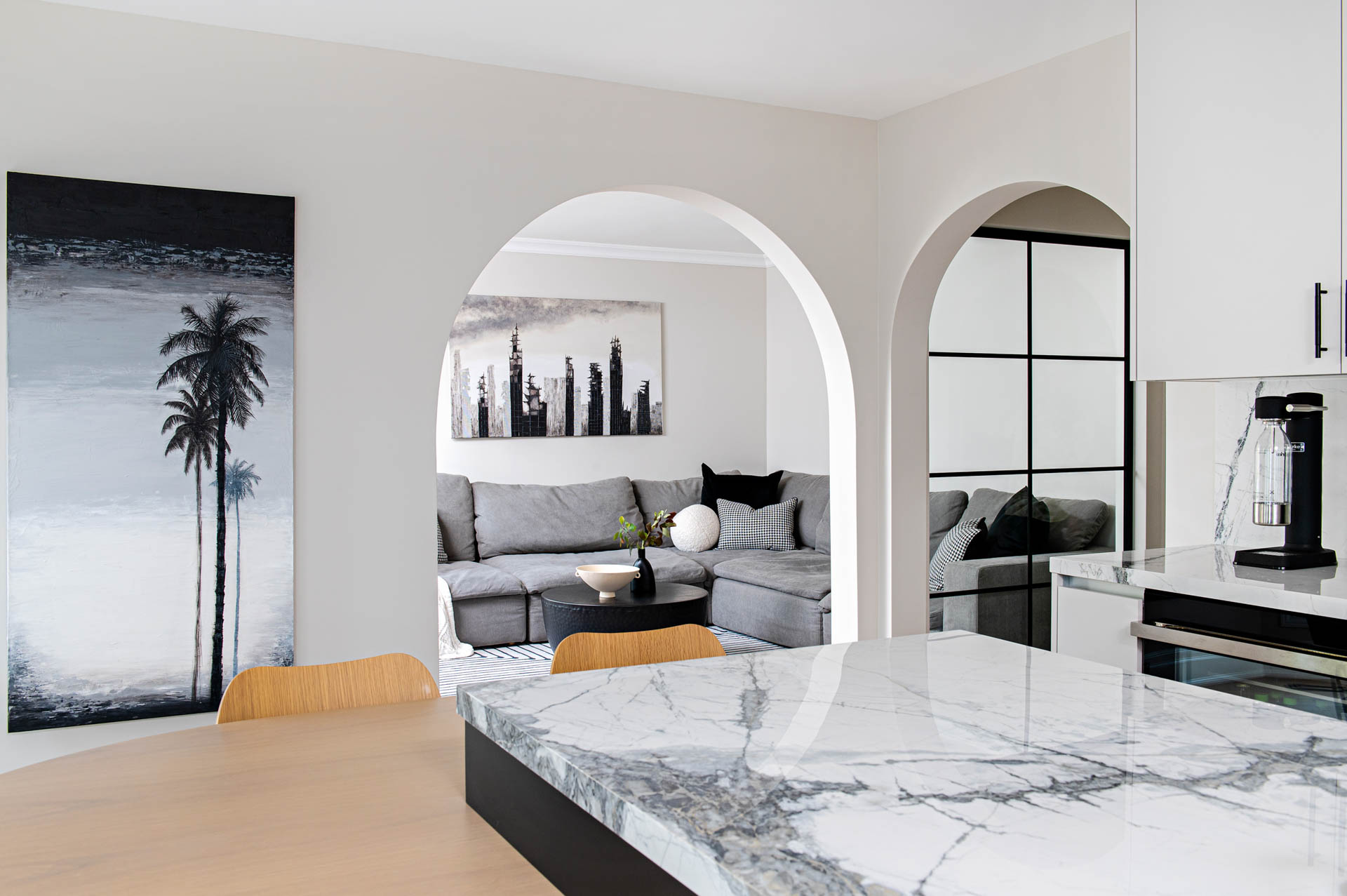
The biggest challenge in this kitchen actually became one of its strongest features. During demolition, we discovered a structural beam between the kitchen and dining room. We originally planned to keep everything flush, but that was no longer possible. Instead of fighting it, we leaned into it. We added a faux beam, finished in the same cabinetry material, to make it feel intentional. It creates a clean transition between the kitchen and dining room, while also balancing the existing ceiling beam.
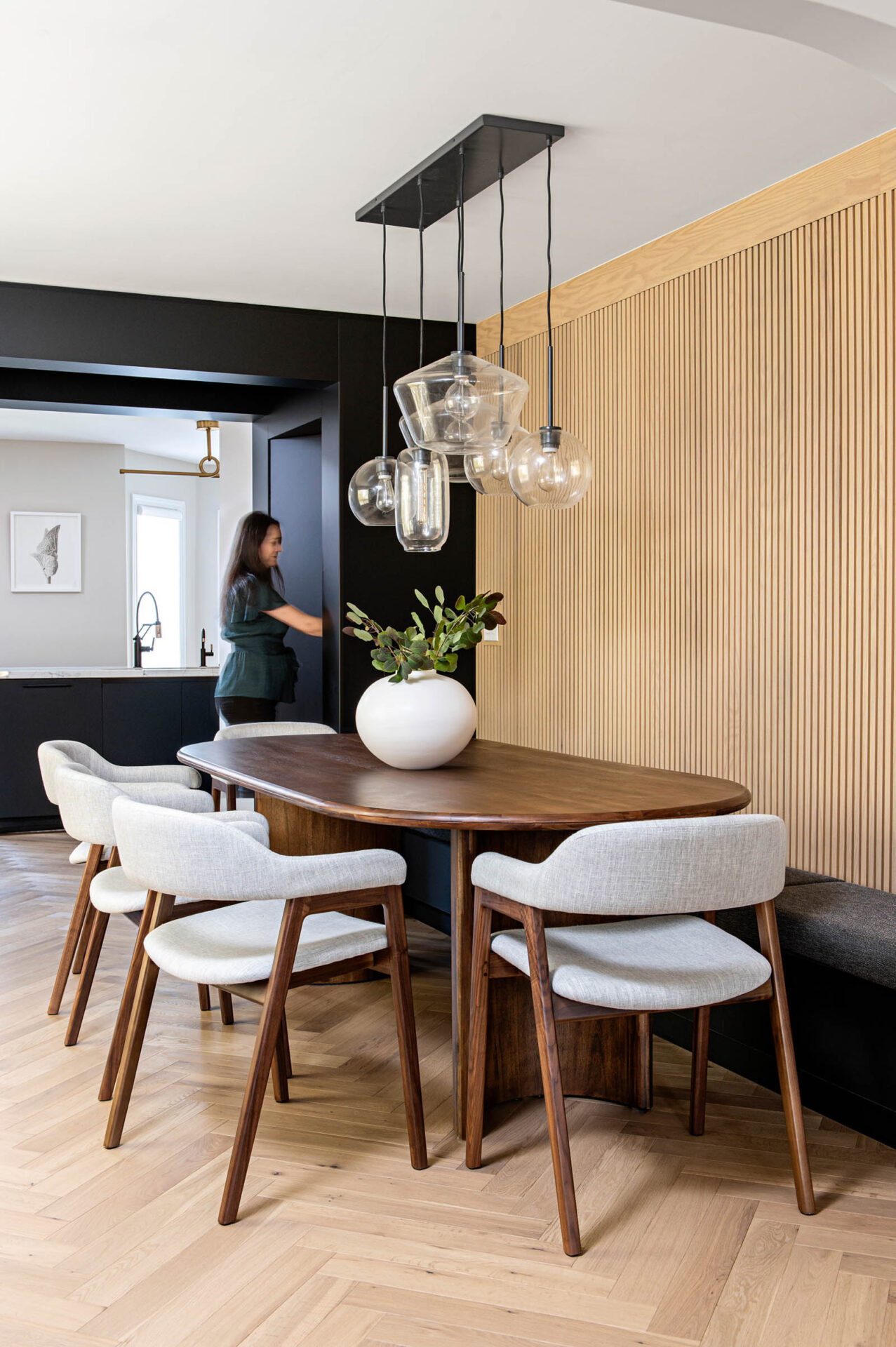
Now, as you move toward the dining area, there’s a subtle division that still allows both spaces to flow naturally into each other. We also integrated a hidden walk-in pantry in that zone, which added both function and visual clarity.
Materials
The goal here was to create something contemporary, with a subtle Scandinavian influence. We played with contrast using black and light gray, but instead of going with a crisp white, we chose a softer gray to keep the space feeling calm.
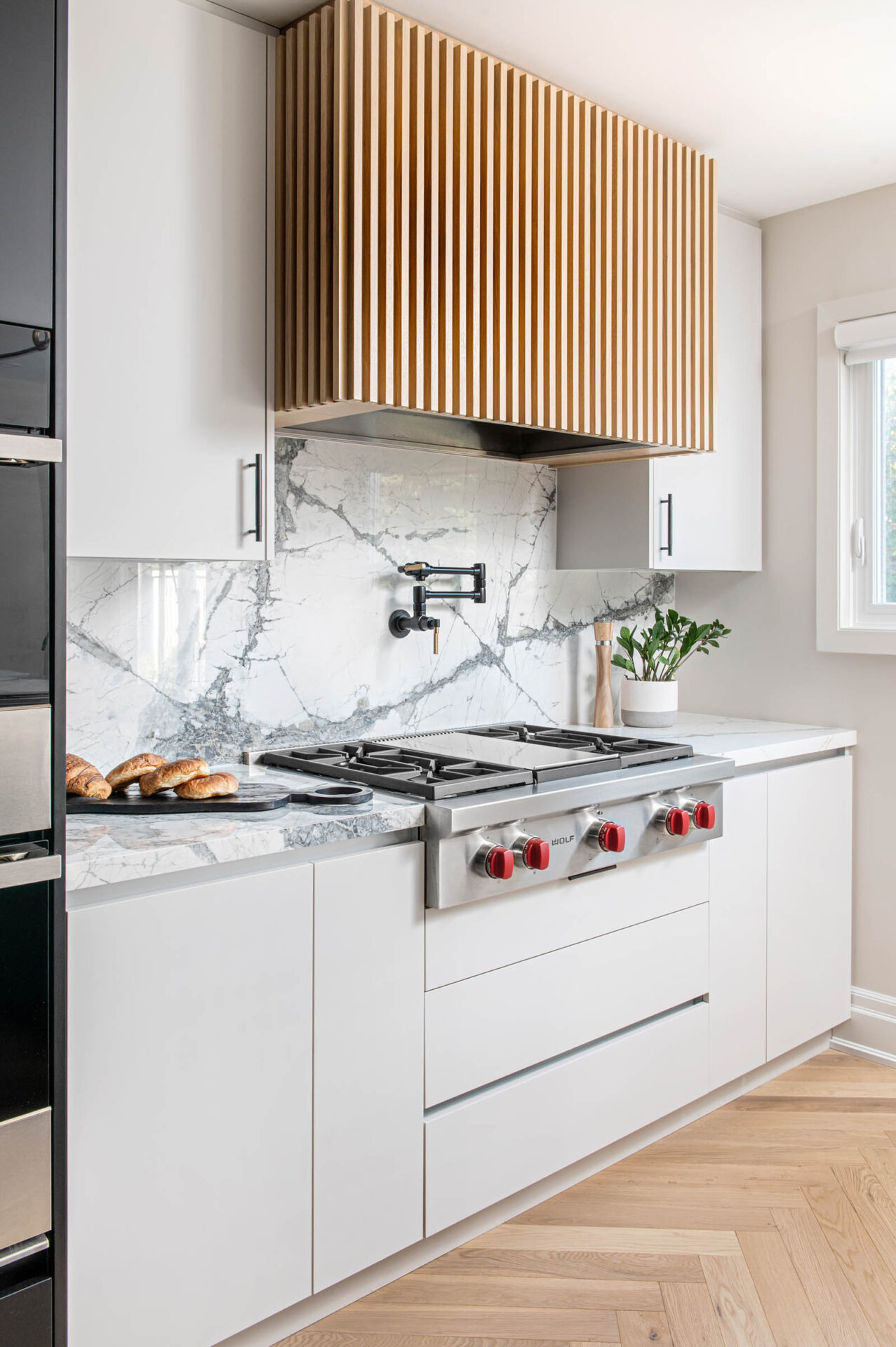
To bring warmth into the design, we introduced natural oak. You’ll see it in the reeded hood fan, the tabletop, and the herringbone wood flooring that runs throughout the main floor. Carrying that same material into the dining room helped connect the two spaces visually. This balance between contrast and warmth is something we’re seeing more in current interior design trends, and for good reason, it creates spaces that feel both modern and inviting.
Choosing the Right Countertop Material
The porcelain countertop and backsplash bring a strong sense of contrast and depth to this kitchen. It was a key design decision that gave us that marble-like look without using natural stone.
Porcelain works really well when you want that aesthetic but still need durability. It’s resistant to scratches, and because it’s non-porous, it’s easy to clean and maintain. It also performs well in natural light. Unlike quartz, it won’t discolour over time when exposed to sunlight, which makes it a great option for brighter spaces.
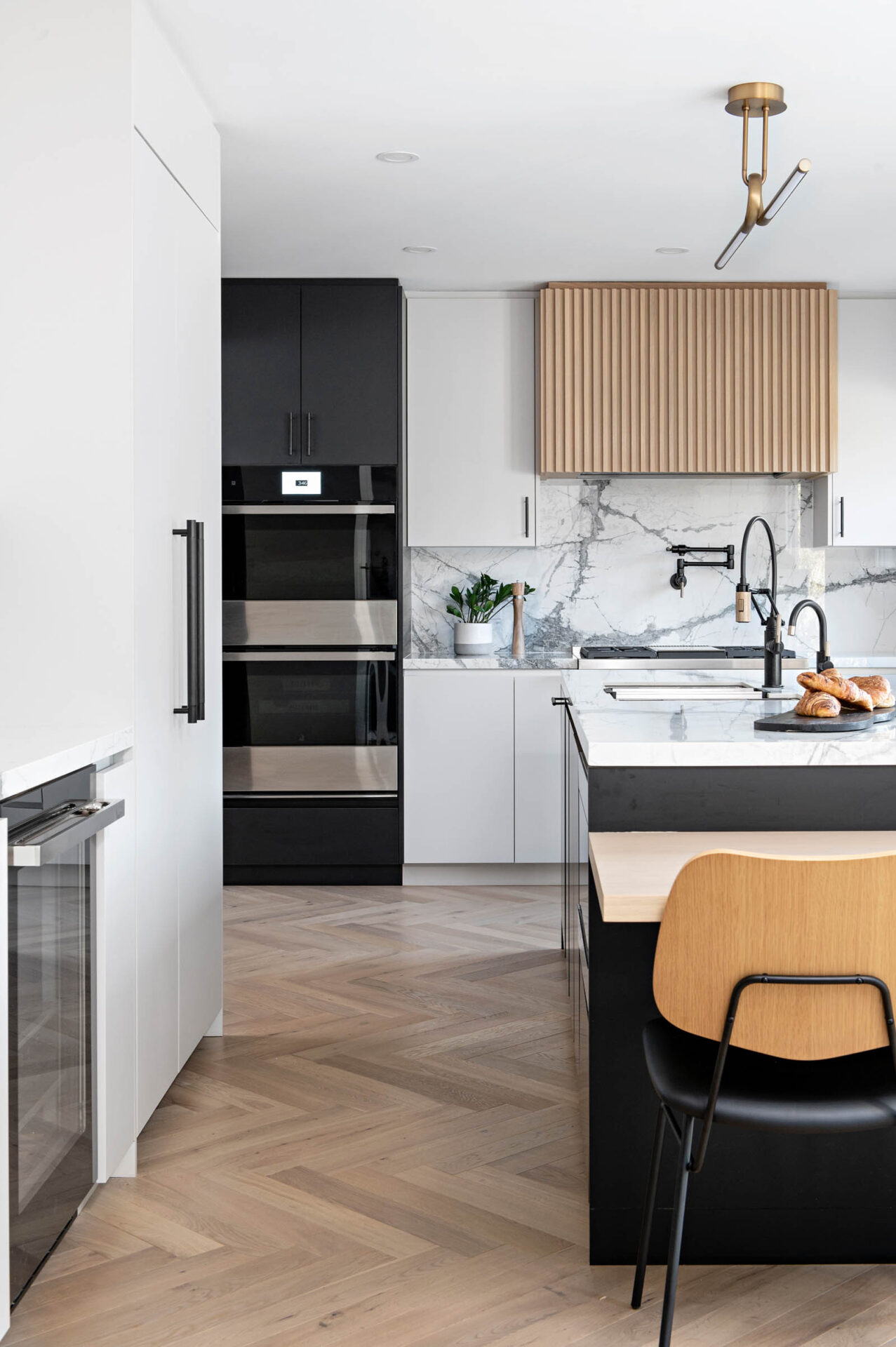
That said, it’s not without its challenges. One concern we often hear is that porcelain can crack. And while that can happen, it usually comes down to installation. Not every installer is equipped to work with porcelain properly, so choosing the right team is essential. It’s also worth noting that while porcelain is strong, it can crack under impact, especially along the edges. And unlike quartz or natural stone, it’s harder to repair if that happens.
Our best advice when choosing a countertop material is to think about how you actually use your kitchen. Consider what you cook, how often you cook, what tools you use, and who uses the space. Every material has its pros and cons, it’s really about choosing what fits your lifestyle best. If you missed it, you can read our full project insights on the Unionville transformation to see how the entire space came together.
A Kitchen Designed for Everyday Living
The kitchen was only one part of this full-home renovation. If you’d like to explore more of the Unionville Residence renovation, browse the related project articles where we take a closer look at the Unionville Residence Primary Suite, the Unionville Residence Mudroom, and other design details that shaped the home. You can also learn more about our Residential Interior Design Services, or follow us on Instagram for completed projects and behind-the-scenes inspiration.
Photography by Mike Chajecki

Leave a Reply
You must be logged in to post a comment.